
of Endodontics
and therefore the need to perform a root canal.
of Endodontics
and therefore the need to perform a root canal.
What is Endodontics?
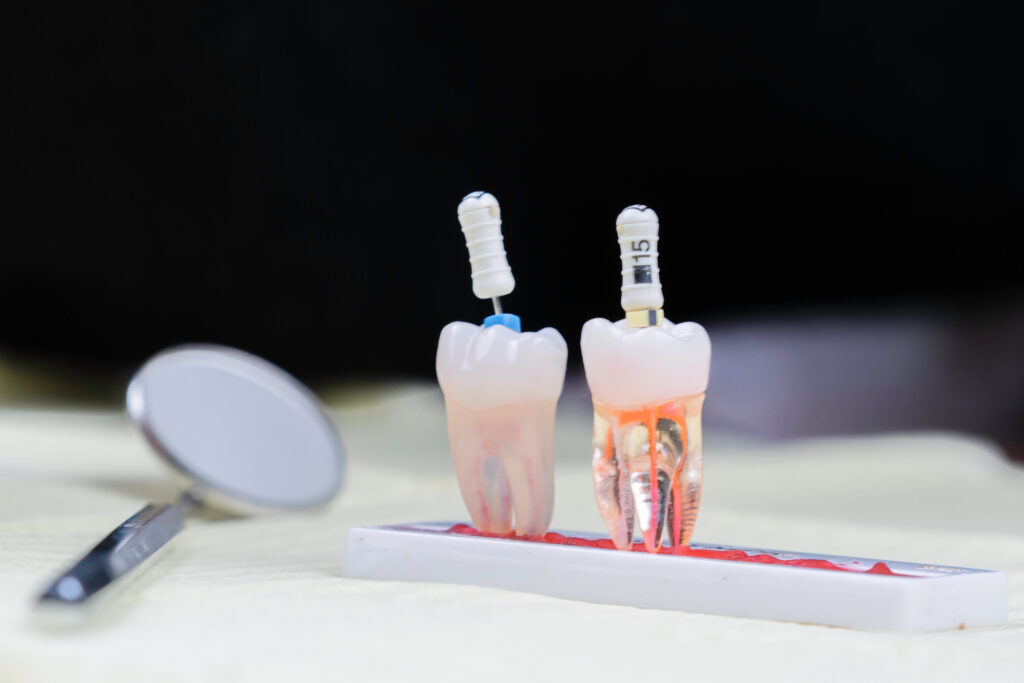
Endodontics is a dental treatment that consists of cleaning, disinfecting and subsequently filling the root canals of a tooth. It is performed when the dental pulp (nerve) is damaged or infected, usually due to deep cavities, trauma or periodontal disease. The goal of endodontics is to save the tooth and prevent extraction, while relieving pain and inflammation caused by infection. This procedure is performed under local anesthesia and may require several sessions, depending on the complexity of the case.
Frequently Asked Questions
What is a root canal for?
Endodontics prevents teeth from having to be extracted, saving them from extraction. Thanks to endodontics, a diseased tooth with bacterial contamination of the nerve can be restored to its health, chewing function and aesthetics.
How do I know if I need a root canal?
- Constant and non-intermittent acute pain
- Tooth color change becoming darker
- Phlegmon
- Increased sensitivity to cold or heat
- Fistula or lump the size of a grain of rice in the gum
Is a root canal tooth weaker?
Once the endodontic treatment is completed, the tooth must be restored and reconstructed to return it to its normal shape. If treated correctly, that tooth will be protected against fracture. In a few cases of endodontically restored teeth, a fracture may occur due to other causes such as bruxism.
Is there an alternative to endodontics?
The only alternative there is is the extraction of the tooth, so endodontics will always be proposed.
Is endodontics painful?
Endodontics are performed under local anesthesia so during the intervention the tooth is asleep and no pain is felt. Once the anesthesia wears off, there may be a slight discomfort of irritation that will subside after two or three days.
Does a root canal tooth need any special care?
After performing a root canal and its restoration, the root canal tooth behaves exactly the same as a normal tooth. It will require the same hygiene, prevention and inspection care as any other piece.


